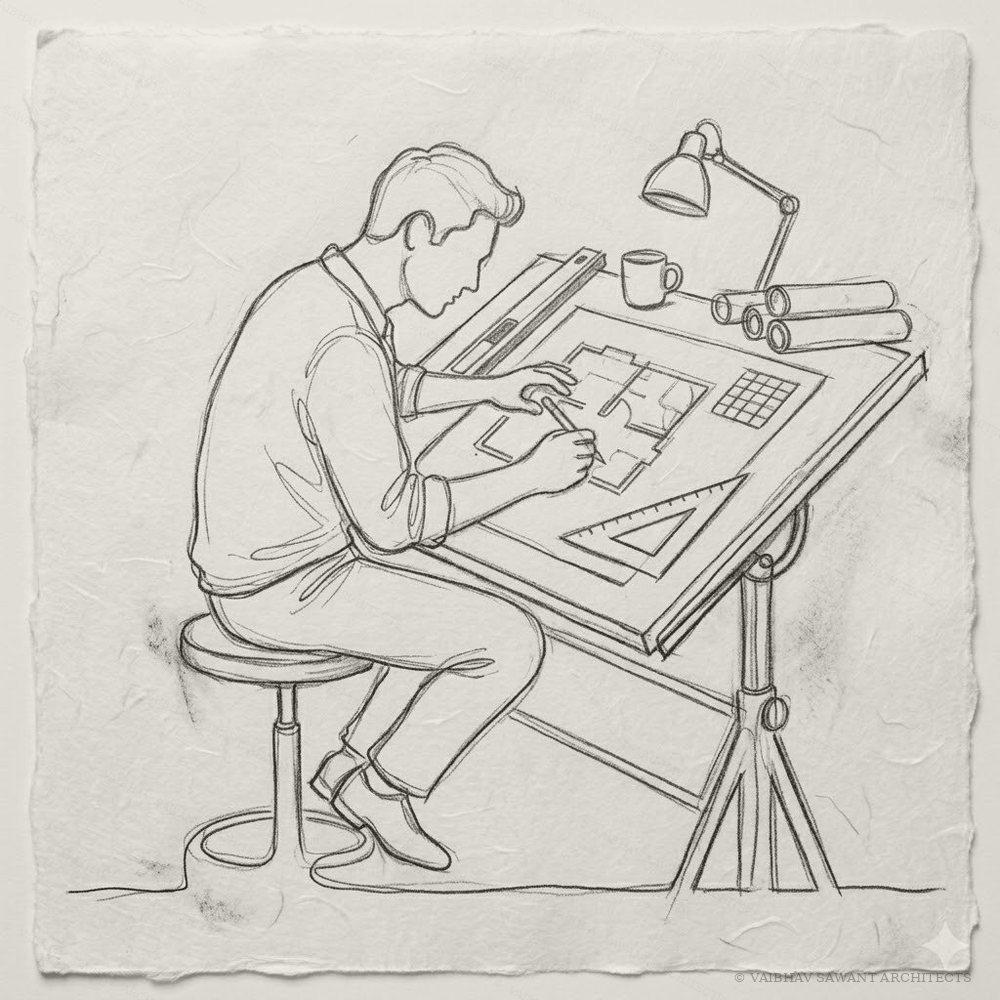
The shape of an evolving body of work. Where the practice tends to land, and the working method behind it.
The categories below are descriptive, not exhaustive. A project is welcomed when it shares the practice's underlying convictions — regardless of typology.
Hospitals, clinics, and recovery spaces designed around the patient's experience of time. Light, acoustics, wayfinding, and dignity treated as primary structural concerns — not finishing details.
Schools, libraries, community centres — spaces of shared use and shared meaning. The architecture of public life, where decisions about access become decisions about citizenship.
Houses and interiors made for specific lives — for the way a particular family moves, gathers, ages, hosts, withdraws. No catalogue. No template. The house should look like its inhabitants.
Older buildings carry stories that new ones cannot. Working with what exists — reading it carefully, removing what must go, keeping what should remain — is often the most ethical kind of design.
Small-scale interventions in dense city fabric. A courtyard restored. A street edge reconsidered. The work that does not announce itself but quietly improves the texture of daily life.
At the scale of the hand. A chair, a table, a doorhandle. Designed where the architecture meets the body. The smallest scale the practice works at, and often the most revealing.
A decade of work, in conversation with public institutions, healthcare providers, and industry — alongside individual residential clients.
Alongside this, the studio has worked with many individual clients on bespoke residential bungalows and interior projects — each developed in private, in close conversation with the family it is built for.
— A closing conviction
Design is not a gift to the few. It is not a luxury reserved for those with large budgets. Design is beyond that — it is inclusive, not exclusive.
Architect & founding principal
The studio operates as a small core team — a handful of architects, designers, and trusted long-term consultants who think together across every project. Lean on purpose. The size of the group is itself a design decision: it keeps the work close to the hand, and keeps every drawing within the studio's collective conversation.
The work is primarily concerned with how buildings can include rather than exclude — how the choices we make about light, scale, threshold, and detail shape who feels welcome in a space and who does not.
The practice does not chase commissions. It accepts work where the questions are interesting and the convictions are shared. Healthcare, civic, and residential projects across New Delhi, Mumbai, and Pune have, over a decade and a half, formed a continuous body of inquiry rather than a portfolio of objects.
The studio is rooted in India, and intends to remain so. The aspiration is not to scale, but to reach — to become, in time, a global practice grounded in its own belief system: that inclusive architecture, made with care, has something to offer wherever it is built.
The deeper interest is design itself — as a way of thinking, as an ethical act, as a quiet form of attention.